An AI agent goes live for appointment rescheduling. It is online and ready to take calls.
A patient asks to change an appointment. Did the new time make it into the scheduling system? If no suitable time was available, did the request reach a qualified person? Can staff see the interaction and its outcome?
Uptime cannot answer those questions. Measuring the launch after go-live requires evidence from the patient-access workflow itself.
Go-live starts the operating test
Go-live confirms that an AI capability is available in production. It gives the team a starting point for evaluating how the AI agent performs in a real workflow.
For an appointment rescheduling workflow, leaders need to follow the patient request from intent to outcome. The operation should show whether the appointment changed, what happened when it could not, and whether staff received the information needed to act.
Launch date, uptime, and handle time each answer a useful question. Together, they still leave an important gap: did the patient complete the job, or reach the correct next step?
Five questions to ask after go-live
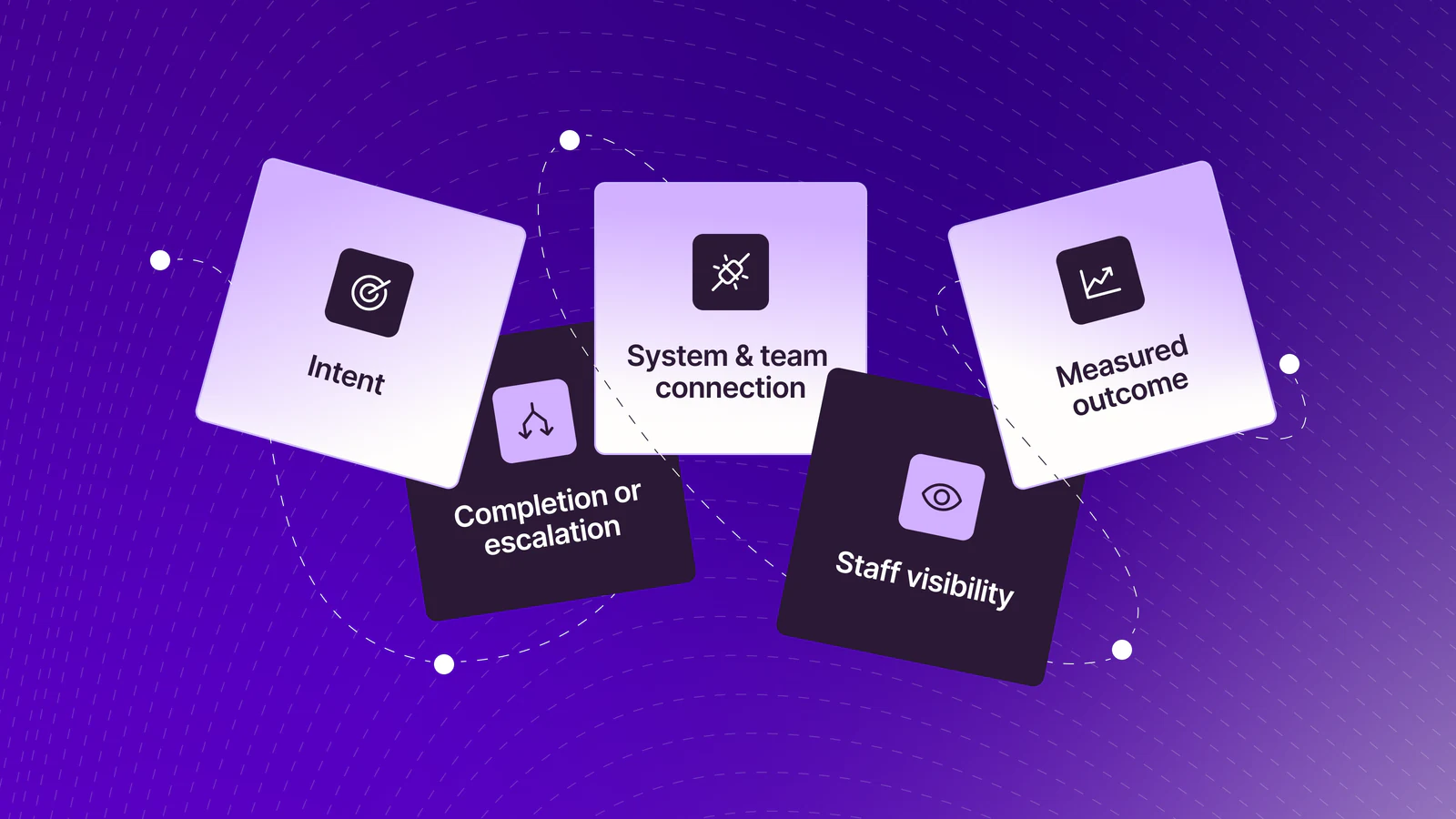
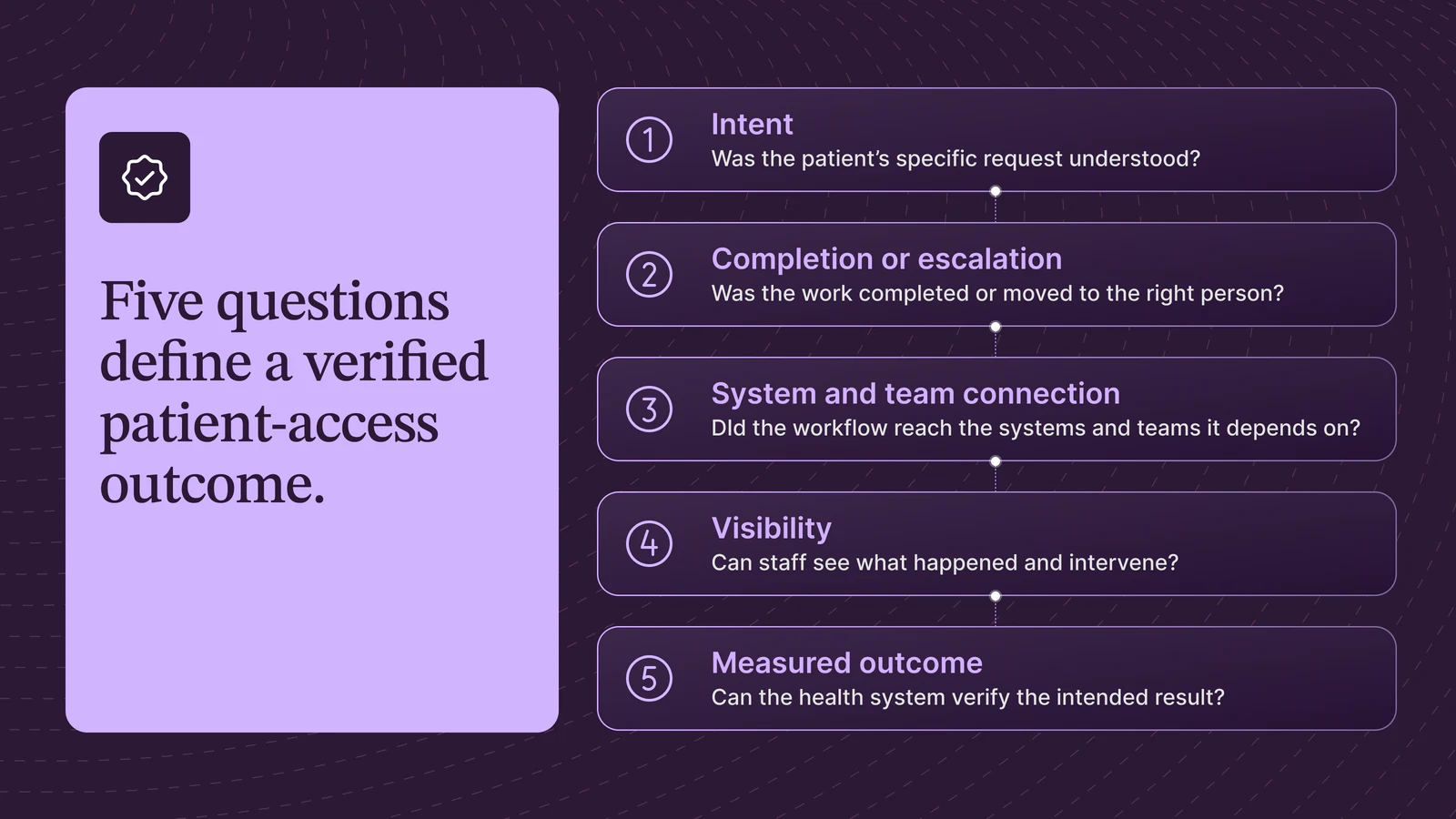
Use five questions to review one patient-access workflow.
1. Was the patient's intent understood?
The workflow should recognize the specific job the patient is trying to complete. “Scheduling” may include making a new appointment, changing an existing one, checking availability, confirming preparation instructions, or asking about a referral.
A broad intent label can hide very different operating paths.
2. Was the work completed or escalated correctly?
Completion may mean scheduling an appointment, updating a record, providing approved information, or creating a follow-up task. Some requests should stop and move to a person. Correct escalation is a successful outcome when policy or judgment requires it.
3. Did the workflow connect to the systems and teams already in place?
Patient access is connected work. The agent may need current information, scheduling access, routing rules, identity verification, and a live escalation destination. A standalone conversation that cannot complete the operational step is still unfinished.
4. Can staff see what happened and intervene?
The team needs reviewable interaction evidence, a clear status, and a path to take control. Visibility should include the conversation result and the handoff, not only whether the agent answered.
5. Can the healthcare organization measure the result?
The right measure follows the job. It may be resolution, completed appointments, successful outreach, correct routing, staff capacity, or another approved access, operational, or financial outcome.
One workflow does not need every possible measure. It needs the ones that prove the intended job was done.
Build a baseline before launch
A useful post-launch comparison begins with a baseline.
Before deploying an AI agent, review a defined set of current interactions. Identify patient intent, resolution, non-resolution reasons, transfers, voicemail, complaints, and the steps staff take outside the conversation.
That baseline answers practical design questions:
- Which requests are routine and well defined?
- Which exceptions depend on clinical or operational judgment?
- Where does the current process already break?
- Which systems and teams must participate?
- What evidence will show that the new path is working?
Starting with the calls can also reveal an unstable workflow before the team automates it.
Review the same workflow after go-live
Continue using the same measures after launch.
Compare intent mix, completion, escalation, non-resolution reasons, transfers, and complaint signals. Review representative conversations where the agent succeeded and where the path stopped. Assign recurring issues to the right owner.
That creates a useful measure of implementation speed:
Time from a defined patient-access need to a verified, operated, and measurable result.
The launch date shows when the capability became available. This measure shows when the workflow became observable, operable, and accountable.
Where Actium Insights fits
ActiumHealth offers Actium Insights to support the evidence layer before and after deployment.
Before a change, analysis of a defined set of recorded interactions can identify the intent mix, recurring access barriers, and candidate patient-access workflows.
After go-live, continuous analysis can help the operation review resolution, non-resolution reasons, complaints, transfers, and other configured measures over time.
Patient access, operations, technology, and governance teams can review the same workflow evidence and act within their responsibilities.
Decide how success will be measured before launch
Choose one patient-access job. Write the approved completion and escalation paths. Name the systems and teams required. Decide which evidence staff need to review. Pick the measure that proves the intended result.
After go-live, review the same workflow against those criteria.
A successful launch leaves the healthcare organization able to show what happened, intervene where needed, and measure the intended patient-access result.