“Not scheduled” looks precise in a report.
It is also incomplete.
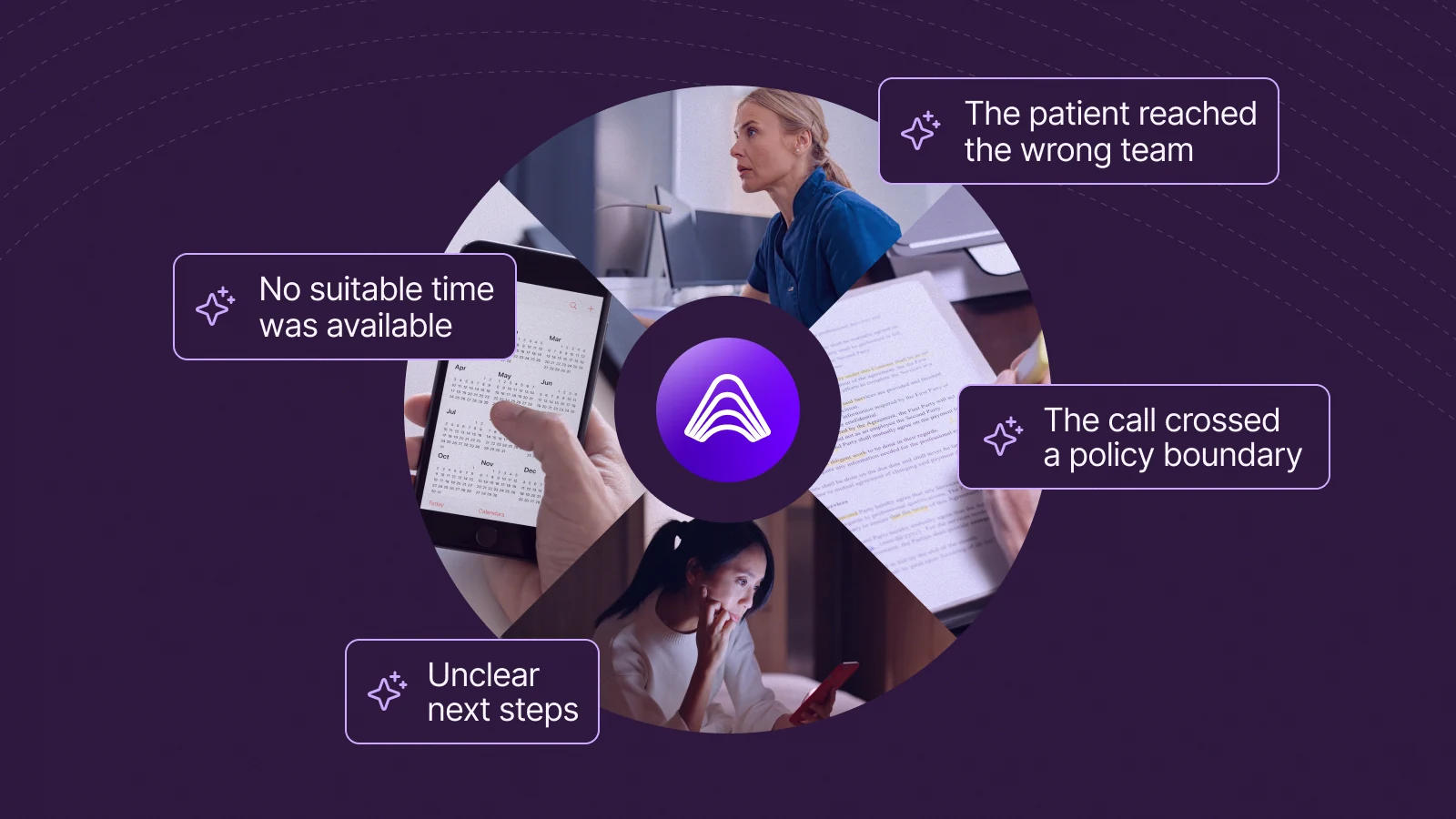
The patient may have declined every available time. The requested service may not have had an open appointment. A transfer may have ended in voicemail. The caller may have needed clinical review before scheduling could continue. The next step may have been correct but poorly explained.
Each path produces the same operational outcome. The causes belong to different teams and call for different responses.
An outcome is the start of the investigation
Reports for an appointment scheduling workflow are good at recording state. An appointment was scheduled, canceled, rescheduled, or left incomplete. That is necessary operational data.
The conversation carries another layer:
- what the patient was trying to do
- which options were offered
- where the workflow paused
- how many handoffs occurred
- whether the request needed a person with different authority
- what the patient was told would happen next
Without that context, an incomplete appointment request can become a generic “access problem.” The response then becomes generic too: add staff, retrain the team, adjust scheduling templates, or automate more of the call.
One of those actions may help. The call evidence should determine which one.
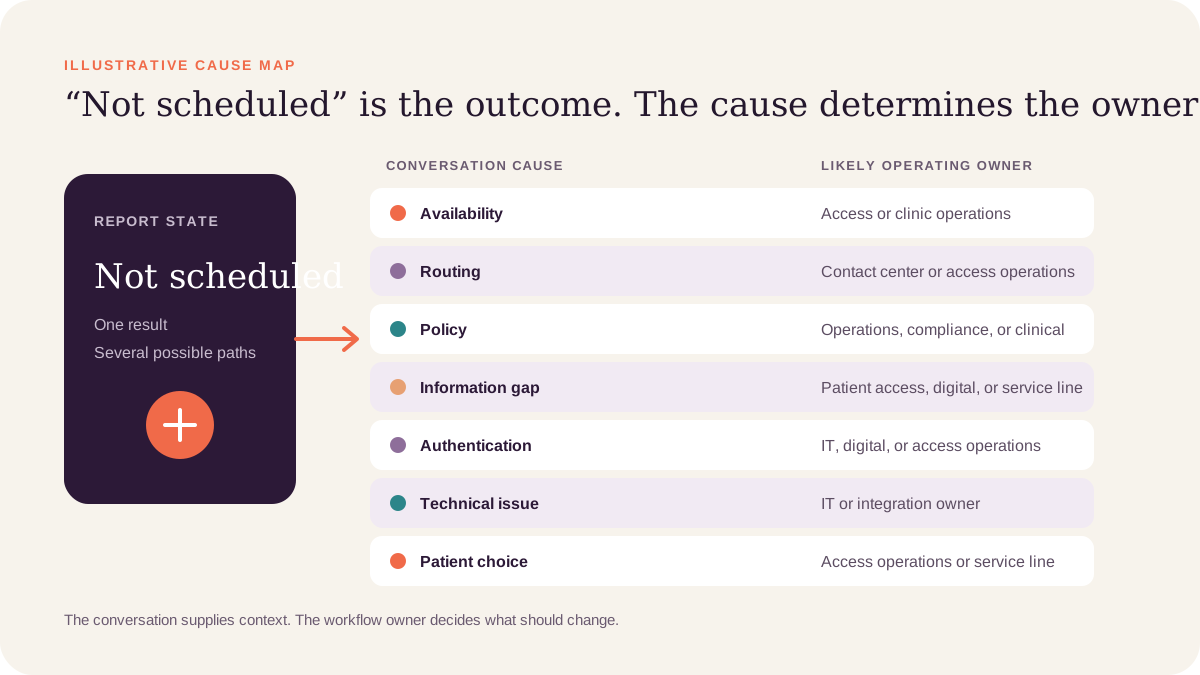
Seven causes that can hide behind one result
The categories below are not a universal taxonomy. They are a practical starting point for reviewing an interaction set and assigning the right owner.
- Availability: No suitable date, location, provider, or appointment type is available. Access, clinic operations, or service-line leadership may need to review templates, release rules, triage, and follow-up options.
- Routing: The caller reaches the wrong queue or department. Contact center or access operations may need to update intent mapping, queue ownership, and department routing.
- Policy: The request cannot proceed without a required review or condition. Operations, compliance, or clinical leadership may need to clarify boundaries, approved steps, and escalation paths.
- Information gap: The caller or team member lacks a required instruction or detail. Patient access, digital, marketing, or the service line may need to correct scripts, web content, instructions, and knowledge sources.
- Authentication: Identity or authorization cannot be confirmed. IT, digital, or access operations may need to review verification steps and the path for exceptions.
- Technical issue: A system, interface, or access point is unavailable. IT, the integration owner, or the vendor owner may need to investigate the exact break and define a fallback.
- Patient choice: The patient chooses not to proceed after hearing the options. Access operations or the service line should preserve the choice, then separate true preference from avoidable friction.
The distinction between patient choice and avoidable friction deserves care. A patient who declines an appointment two months away made a choice. The limited availability still belongs in the operating picture. A patient who needs time to consult a family member may have received exactly the right outcome. Counting both as “lost” would distort the work.
Read the sequence, not just the final state
A conversation often reveals more through its sequence than through a single label.
Imagine an illustrative call:
- The patient asks for a specialist appointment.
- The first team cannot find the referral.
- The patient is transferred to a referral queue.
- That queue explains that clinical review is pending.
- The patient is told to call back but receives no timeframe or owner.
The final state is “not scheduled.” The sequence includes an information gap, a handoff, a valid policy boundary, and an unclear follow-up path.
That sequence changes the action. The health system may not need more appointment slots. It may need a visible referral status, a clearer handoff, and a callback commitment.
This is why transfer count alone is not enough. Some transfers move a patient toward resolution. Others move the same uncertainty from one queue to another. The destination, reason, and result matter.
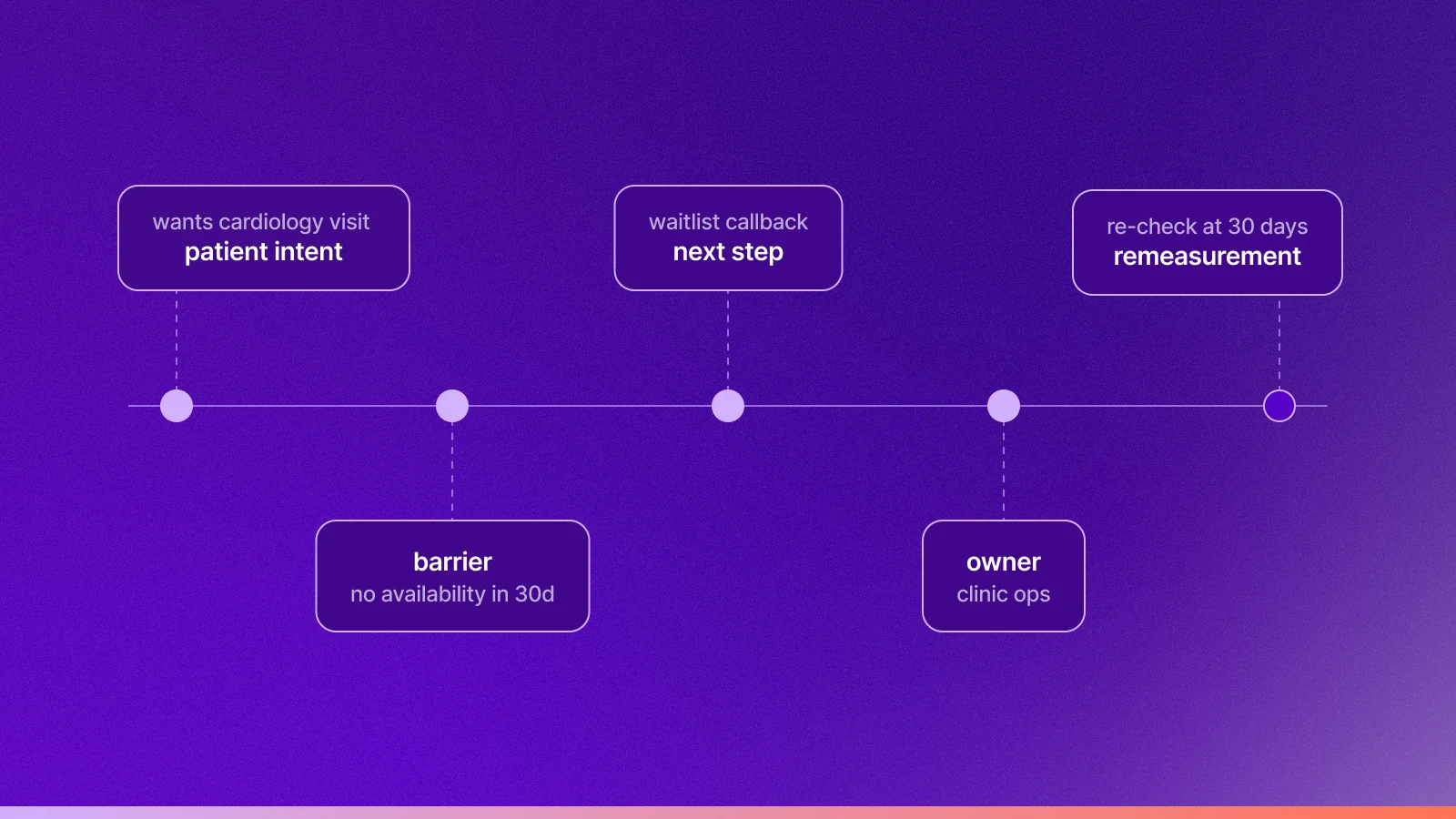
Turn conversation evidence into an owned response
A useful review does four things.
Classify the reason
Start with a definition that a reviewer can test. “Scheduling issue” is too broad. “No appointment within the patient's stated date range” is more useful.
Confirm it in representative calls
Read or listen to examples. Check whether the category matches what happened. Record exceptions. The goal is dependable evidence, not a perfectly tidy chart.
Assign an owner with the authority to act
An observation without an owner becomes another dashboard tile. The owner may sit in patient access, clinic operations, IT, digital, compliance, or a service line. Name the team before proposing the fix.
Measure the same signal again
After a routing rule, script, template, or follow-up path changes, review the same intent and non-resolution reason. Improvement should appear in the interactions, not only in the project plan.
Where Insights fits
ActiumHealth offers Actium Insights to analyze a supplied set of recorded interactions through Insights Discovery or support ongoing analysis through Insights Analytics. The configured analysis can classify intent, resolution status, non-resolution reason, complaint signals, transfers, voicemail, and interaction summaries.
Those measures connect the operational result to the conversation that produced it. They do not decide whether every outcome is good or bad. Workflow owners still provide policy, clinical, and service-line context.
That division of labor is useful. Analysis finds the repeated path. People decide what the path means and what should change.
A better first question
When a scheduling report shows an incomplete request, resist the urge to jump to a remedy.
Ask this first:
What happened in the conversation immediately before the workflow stopped, and which team had the authority to move it forward?
The answer separates an outcome worth counting from a cause worth fixing.