Patient communication follows an unwritten rulebook: a delicate balance of efficiency and empathy that's developed over decades. Many industry experts will tell you that patient interactions are too nuanced, too human, to be effectively automated. Conventional wisdom suggests that technology and compassion exist in opposition.
But the data and learnings we've experienced automating patient communications at scale tell a different story. After automating more than 50 million healthcare calls, we've uncovered patterns that weren't visible at smaller scales. It's like the difference between observing a few dozen birds and tracking entire migration patterns across continents. At this scale, surprising truths emerge.
1. The trust paradox
Think about the last time you answered a call from an unknown number. You probably didn't. Few of us do anymore. But here's where it gets interesting: patients desperately want to hear from their healthcare providers, just not from strangers.
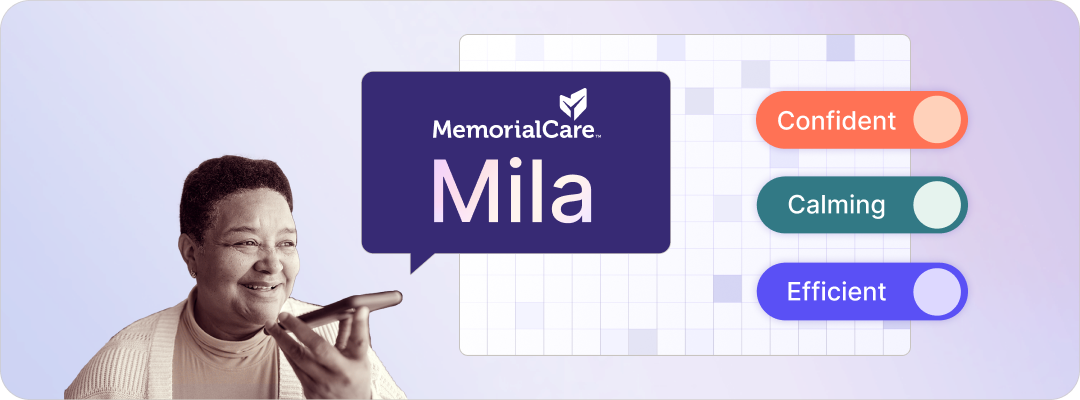
This paradox became crystal clear in our work with MemorialCare. When designing their 24/7 caller experience, it was crucial that the AI voice conveyed trustworthiness. That's why we custom-designed a voice persona named "Mila," specifically selected to be "confident, calming, and efficient," qualities that immediately put patients at ease despite interacting with an AI system.
2. The archaeological dig of healthcare systems
You are probably familiar with how archaeologists carefully excavate ancient cities, layer by layer. That's remarkably similar to what happens when you integrate with healthcare infrastructure. This reality hit home when we partnered with a large decentralized physician organization spanning multiple states, trying to transform "a confederation of hundreds of small businesses into a singular brand promise."
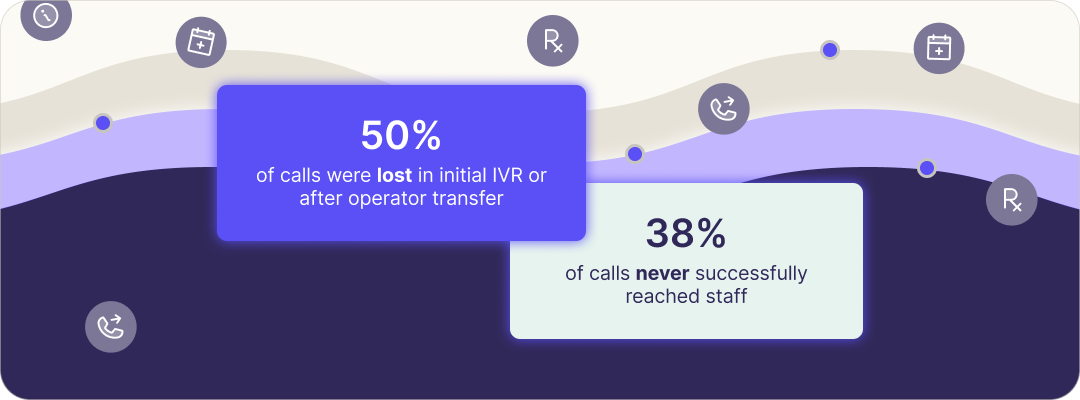
We deployed our Illuminate diagnostic across 29 practices in 5 states, recording over 80,000 calls in a two-week period. Layer by layer, we uncovered the hidden reality: half of calls were lost in initial IVR or after operator transfer, 38% of callers never successfully reached staff, and infinite-loop IVRs meant 90% of callers couldn't reach the billing department. This layered complexity was even more pronounced at a leading health system with 250+ locations, where mergers had fragmented the patient experience. By establishing a centralized telecom leadership team and standardizing these layers, we transformed the experience across 10 million annual calls while saving the equivalent of 230 full-time employees of effort.
3. The invisible infrastructure of knowledge
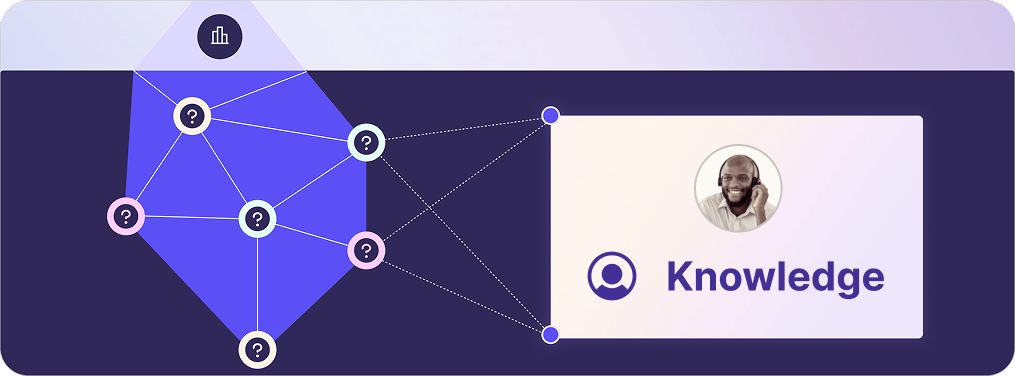
There's a fascinating phenomenon in healthcare: the most critical operational information often exists nowhere and everywhere simultaneously. What patients need, how calls should be routed, when exceptions should be made: this knowledge typically lives in the minds of experienced staff rather than in documented systems.
We encountered this firsthand with a leading non-profit health system receiving nearly 150K ambulatory calls monthly. The invisible complexity became apparent when we discovered how prescription renewals were handled: staff verbally verified patient information for each call, a process that existed primarily as institutional knowledge. By making this knowledge visible and integrating directly with their Epic EHR, we created a prescription renewal system that doesn't require patients to remember their medical record number or password. The result: ActiumHealth deflected 68% of inbound calls away from staff, and for callers identified with prescriptions in their EHR, we automated the renewal process for 95% of them without requiring any staff intervention.
4. The multi-dimensional success matrix
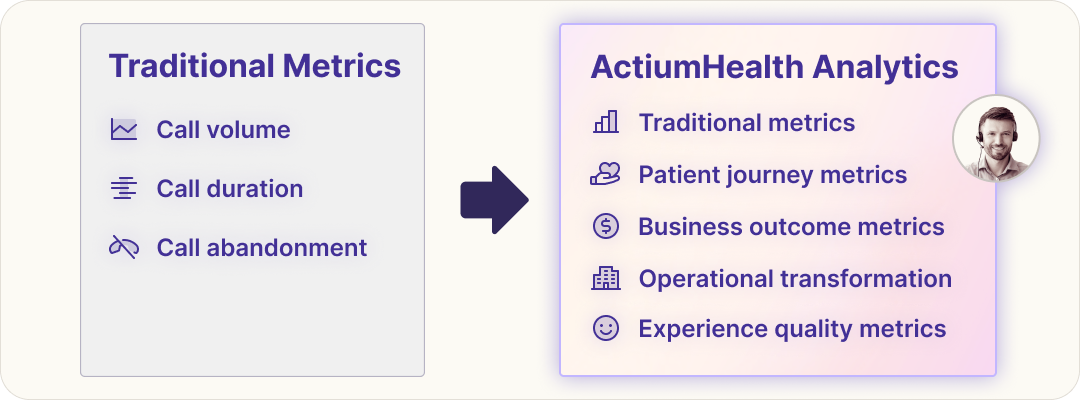
Typical call metrics are like trying to describe a symphony by only measuring its volume. They miss the richness of what's actually happening when patients and healthcare systems interact. This became evident with a leading academic medical center handling 2.7 million calls annually. Traditional metrics tracked volumes, duration, and abandonment rates, but missed the transformative impact of automation.
Our more sophisticated analytics revealed that reducing call volume to hospital operators by 65% wasn't just saving time, it freed up 60 FTE of capacity that could be upleveled to manage more complex patient needs. The multi-dimensional nature of success was even more apparent with Virtua Health: by analyzing medical records to identify high-risk patients, Virtua generated over 25,000 appointments with 66% leading to necessary procedures, creating more than $25 million in revenue with a 21x ROI.
5. The resilience requirement
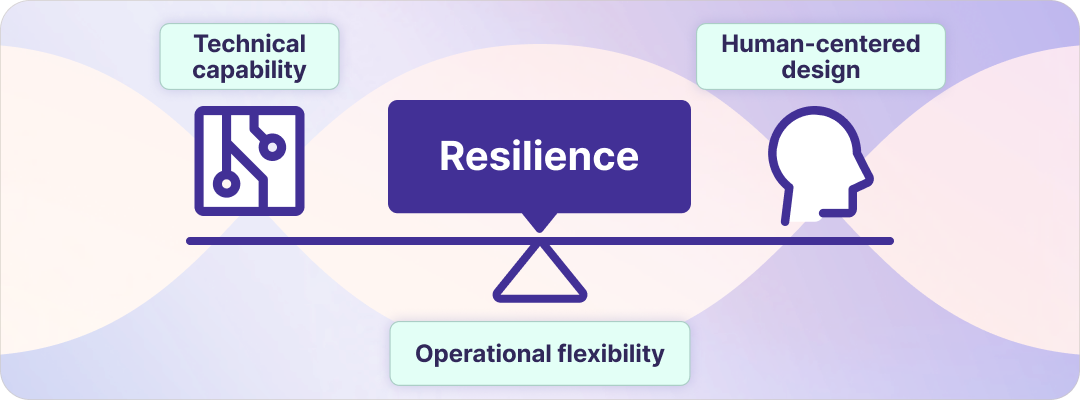
Behind every successful healthcare automation system is a complex balancing act between technical capability, operational flexibility, and human-centered design, what we call resilience. Perhaps the most demanding resilience test came with implementation timelines. When a leading health system told us that long calls during busy periods could cost them $10-15 each, even those ending without resolution, we knew that traditional months-long implementations wouldn't work.
At MemorialCare, we demonstrated this operational resilience by answering 100% of calls within 8 weeks of contract signature, a speed of deployment that protected staff from burnout during critical transition periods. True resilience isn't just about technology that works, it's about technology that works consistently, across languages, volumes, and implementation challenges, without compromising the human experience.
6. The human amplification effect
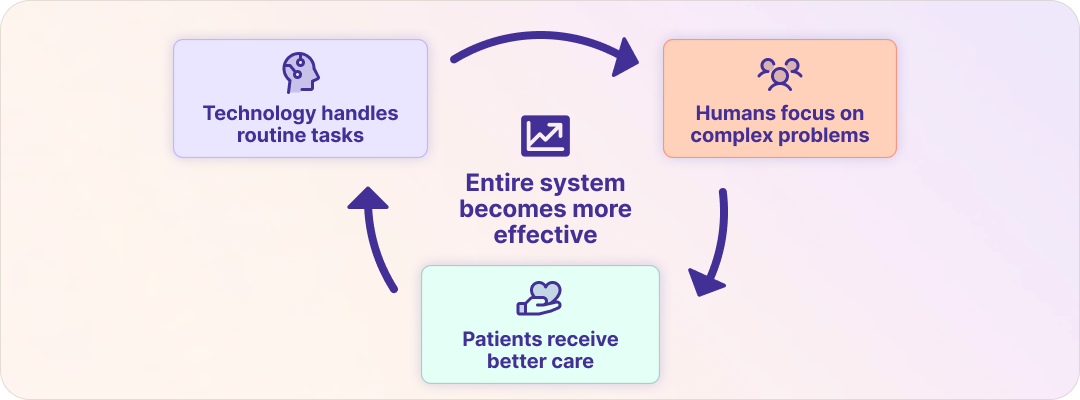
The most surprising discoveries were the ways systems could create opportunities that simply weren't possible before. While providers go to great lengths to encourage patients to get needed care, a mammogram, a referral to cardiology, half of open orders sit unfilled, leading to gaps in patient care and missed revenue.
At a leading regional health system, we deployed AI agents that automatically reached out to patients identified in an EMR worklist, reminded them of the open order, understood whether they were still interested in scheduling and what the barriers were, and transferred callers to a human agent as needed. This moved staff from 15% of calls reaching an interested patient to 100%, generating 37,000 new appointments per year and $11 million in additional revenue per year. The technology doesn't replace human capabilities, it amplifies them, creating continuous improvement that would be impossible with either technology or humans alone.
The big picture
What does all this tell us? That successfully automating healthcare communication isn't primarily a technical challenge, it's a human one. Understanding the social, organizational, and behavioral dimensions matters as much as the AI itself.
The new entrants entering this market with impressive demos aren't wrong about the technology's potential. But they're missing the hard-earned wisdom that comes from navigating the messy reality of healthcare at scale. After 50 million calls, we've learned this truth: lasting innovation doesn't come from disruption alone, but from the patient, meticulous work of translating technological possibility into human reality, one conversation at a time.